
Hormonal acne vs bacterial acne: know the difference and treat the right way
You have been dealing with acne for months. You have tried the serums, the spot treatments, the salicylic acid wash, the niacinamide, and the various things the internet told you would work. Some of it helped a little, some of it did nothing, and a few things seemed to make it worse. The breakouts keep coming back, often in the same places, on a schedule that seems almost predictable. Or they appear randomly, scattershot across the face, triggered by what feels like nothing at all. The frustration is not with your effort or your routine. The frustration is that you have been treating acne as a single condition when it is not.
Hormonal acne and bacterial acne are two fundamentally different conditions that can look almost identical on the surface but arise from completely different causes and require completely different treatments. Using a topical acne product on hormonal acne the way you would use it on bacterial acne is like treating a fever with a bandage. It addresses the surface while the actual cause continues unchecked below it. This is why so many people spend months on skincare routines that do not fully clear their skin: they are using the right products for the wrong type of acne.
This blog explains exactly what drives each type, how to identify which one you are dealing with, why the treatment for one actively fails on the other, and what a dermatologist looks at when deciding how to approach an acne case that has not responded to the usual approach.
Three Ways Hormonal and Bacterial Acne Differ at the Root

Where the Problem Starts
Hormonal acne starts inside the body. Fluctuating androgens signal the sebaceous glands to produce excess oil, which then clogs pores and creates the environment for deep, inflamed breakouts. The cause is internal and systemic. Bacterial acne starts on the skin surface and inside the pore, where excess oil, dead skin cells, and bacteria combine to create blockages and inflammation. The cause is external and local. This single difference determines everything about how each type should be treated.
Where It Appears on the Face
Hormonal acne has a characteristic location: the lower face. The jawline, chin, and lower cheeks are the areas with the highest density of androgen-sensitive sebaceous glands, which is why hormonal breakouts cluster there so reliably. Bacterial acne has no such restriction. It can appear anywhere on the face where pores become blocked, including the forehead, nose, cheeks, and back. If your breakouts are consistently concentrated on the lower face, that location itself is a diagnostic clue worth taking seriously.
What Treatment Actually Reaches the Cause
Bacterial acne responds well to topical treatments because the cause is on and in the skin surface where topicals can reach it. Hormonal acne needs internal treatment, whether hormonal regulation, oral medication, or both, because the cause is a systemic signal that no amount of topical product applied to the outside of the skin can intercept. Applying acne serums to hormonal acne treats the symptom while the cause continues producing new breakouts from within.
Hormonal Acne: What It Is and How to Recognise It
Hormonal acne is driven by fluctuations in androgenic hormones including testosterone, which stimulate the sebaceous glands to produce significantly more oil than the pore can clear efficiently. This excess oil combines with dead skin cells to create deep blockages that become inflamed, producing the characteristic deep, painful, often cystic breakouts that sit under the skin for days before they surface, and sometimes do not surface at all. In women, hormonal acne is closely linked to the menstrual cycle, with flares typically appearing in the week before menstruation when progesterone rises and oestrogen falls. It is also strongly associated with PCOS, with stress-driven cortisol spikes that trigger secondary androgen increases, and with the hormonal shifts of perimenopause, pregnancy, and postpartum recovery.
The defining characteristics that point toward hormonal acne rather than bacterial acne are as follows.
- Breakouts are concentrated on the jawline, chin, and lower cheeks, often in the same locations repeatedly rather than appearing randomly across the face.
- Flare-ups are predictably timed around the menstrual cycle, typically worsening in the week before a period and improving after menstruation begins, or worsening during periods of high stress regardless of the cycle timing.
- The pimples are often deep, large, and painful to touch, the kind described as cystic acne lesions that sit under the skin without coming to a visible head for days, cause significant discomfort, and take much longer to resolve than surface-level pimples.
- The acne persists or worsens into adulthood despite a good skincare routine, and standard topical acne products produce minimal or temporary improvement at best. This lack of response to otherwise effective topical treatments is itself a strong signal that the cause is hormonal rather than skin-surface bacterial.
- In women, other signs of hormonal imbalance may be present alongside the acne, including irregular periods, unexplained hair thinning on the scalp, increased facial or body hair, or a diagnosis or suspicion of PCOS. These signs together with persistent jaw and chin acne make a hormonal investigation a high-priority next step.
Bacterial Acne: What It Is and How to Recognise It
Bacterial acne, the most common form of acne overall, occurs when excess sebum and dead skin cells block a pore and Cutibacterium acnes bacteria, which live naturally in pores in small numbers, multiply in the now oxygen-depleted, oil-rich blocked pore and trigger an immune inflammatory response. The result is a visible pimple, ranging from a non-inflamed comedone in the form of a blackhead or whitehead through to an inflamed red pustule or papule depending on how deeply the inflammation develops. Unlike hormonal acne, bacterial acne has no strong internal hormonal driver and is primarily influenced by external and environmental factors.
The defining characteristics that point toward bacterial acne are as follows.
- A mix of blackheads, whiteheads, and inflamed pimples that can appear anywhere on the face as well as the back, chest, and shoulders, without the specific lower-face concentration of hormonal acne.
- Breakouts worsen with specific external triggers including humidity, heavy sweating, using pore-clogging products, or not cleansing effectively after a long day. In Mumbai’s monsoon specifically, bacterial acne typically worsens between July and September when ambient humidity, sweat, and pollution collectively increase pore congestion.
- The pimples are primarily surface-level rather than deep and cystic. Blackheads and whiteheads without significant pain or depth are almost always bacterial-comedonal rather than hormonal, and even inflamed pimples that come to a head within a day or two fit this category better than the deep, slow-developing lesions of hormonal acne.
- The breakouts respond, at least partially, to topical actives like salicylic acid, benzoyl peroxide, or niacinamide. Even a partial, incomplete response to these ingredients suggests a bacterial component is present, even if other factors are also contributing.
Why the Treatment for One Fails on the Other
This is the core clinical point that makes identifying your acne type so important in practice rather than just in theory.
What a Dermatologist Does Differently When Assessing Your Acne
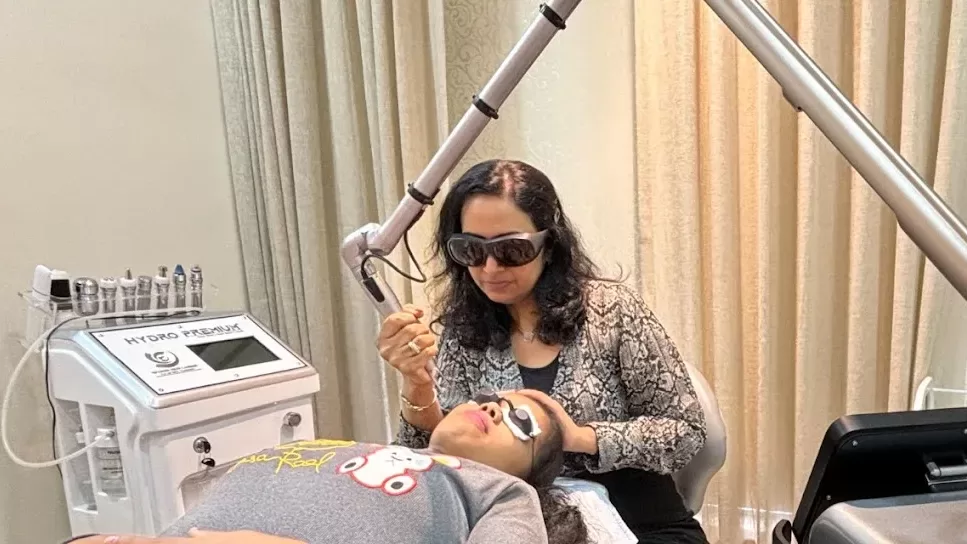
When a patient presents with acne that has not responded to their own skincare attempts, the most important thing a dermatologist does first is not prescribe a stronger product. It is identify the type.
- The distribution and character of the lesions, their location on the face, whether they are comedonal or cystic, surface-level or deep, gives the clearest initial indication of hormonal versus bacterial predominance, and a trained eye reads this within minutes of examining the skin directly.
- A detailed history of the acne pattern over time, including whether it cycles with the menstrual cycle, whether it worsens with stress, whether it appeared or worsened with a hormonal change such as stopping the pill, pregnancy, postpartum, or perimenopause, gives crucial information about the hormonal component that the skin examination alone cannot reveal.
- Where a hormonal component is suspected, a blood test panel covering testosterone, DHEA-S, LH, FSH, and in some cases thyroid function and fasting insulin gives objective data that either confirms the hormonal driver or rules it out and points the investigation toward other causes.
- The treatment plan that follows this assessment is built for the specific type of acne identified, not for acne in general. This is the fundamental difference between a prescription that finally works and six months of skincare products that did not.
Summary
If your acne has been resistant to everything you have tried, the most likely explanation is not that you have not found the right product yet. It is that you have been treating the wrong type. Knowing whether the driver is hormonal or bacterial changes everything about the approach, from what you use on your skin to whether an internal investigation is needed. The place to get that answer is not a pharmacy or a skincare brand but a proper assessment with a dermatologist who can look at your lesion pattern, understand your history, and tell you specifically which type of acne you have and what it actually needs. Dr. Reshma Ahuja sees acne patients at the Skin and Hair Clinic, Hiranandani Gardens, Powai, and approaches every acne case with the same starting question: what is actually causing this, and is the current treatment reaching that cause. If yours is not, a single consultation is the most efficient way to find out why and what to do about it. Your skin deserves a treatment plan built for the acne it actually has.

Leave a Reply
You must be logged in to post a comment.