
Hybrid Laser Treatments: Why One Session Can Now Do More
Have you ever looked at your skin and felt that there is not just one thing you want to improve? Maybe you have acne scars that have stayed for years, a few stubborn dark spots, fine lines around your eyes, and skin that simply does not look as smooth as it used to. You search for treatments, and suddenly there are so many options that choosing one becomes confusing.
Traditionally, different skin concerns often required different treatment approaches. However, advances in laser technology have introduced something interesting: hybrid laser treatments. These treatments combine different laser wavelengths or approaches to target more than one aspect of the skin in a carefully planned session.
And this is what makes hybrid laser treatment for skin worth understanding. Instead of looking at every concern separately, your dermatologist can consider your skin as a whole and decide whether a combined laser approach is suitable.
What Exactly Is a Hybrid Laser Treatment?
Think of it this way. Different laser wavelengths interact with different parts of your skin. Some target the outer surface, while others deliver controlled heat into deeper layers.
A hybrid laser combines two different laser approaches, commonly an ablative and a non-ablative wavelength, in one treatment platform. Depending on the device, these energies may work together in the same treatment session to address different skin concerns.
In simple words, one part of the treatment can help improve surface irregularities while another stimulates changes deeper within the skin.
Medical terms worth knowing: ablative laser resurfacing and non-ablative laser resurfacing.
Why Is Combining Laser Technologies Such a Big Deal?
Your skin is made up of different layers, and not every concern develops at the same depth.
For example, rough texture may involve the outer skin surface, while fine lines and certain scars involve changes deeper in the skin. Treating only one layer may not address every concern.
Hybrid technology allows a dermatologist to combine different treatment effects in a planned way. This can make the treatment more versatile without automatically increasing the intensity of every laser setting.
A clinical study published in the Journal of Drugs in Dermatology evaluated a hybrid laser combining 1470 nm and 2940 nm wavelengths. It reported improvements in skin appearance, including pigmentation, tone and texture, among the participants studied. Read the published clinical study.
What Skin Concerns Can Hybrid Laser Treatments Help With?
This is probably the part most people want to know. If you are considering hybrid laser treatment for skin, here are some of the concerns that may be evaluated for treatment.

Acne Scars and Uneven Texture
Do you still notice small dents or uneven patches even after your acne has settled? Certain hybrid laser approaches can help improve the appearance of selected acne scars by stimulating skin remodelling.
Uneven Skin Tone and Pigmentation
Stubborn spots, sun damage and uneven tone can make the complexion look less even. Certain laser wavelengths can target selected pigment-related concerns, depending on their cause and depth.
Fine Lines and Early Ageing
Fine lines, sun damage and changes in skin texture can become more noticeable over time. Laser resurfacing may help improve the appearance of these changes by supporting collagen remodelling.
Remember, not every hybrid laser treats every concern equally. The exact wavelengths, device and treatment settings determine what can realistically be addressed.
How Does Hybrid Laser Technology Work?
To understand the technology, it helps to know what the two main laser approaches do.
1. Ablative Laser Technology
Ablative lasers remove very small, controlled portions of the outer skin surface. This encourages the skin to heal and renew itself. They can be useful for selected concerns involving surface texture, wrinkles and scars.
2. Non-Ablative Laser Technology
Non-ablative lasers deliver controlled heat into the skin without removing the outer skin layer. This can stimulate collagen-related changes and support gradual improvement in texture and skin quality (fractional laser resurfacing).
Fractional technology treats tiny columns or sections of the skin rather than the entire surface at once. The surrounding untreated skin helps support the healing process.
When these approaches are combined, the dermatologist can plan treatment around different layers and concerns instead of relying on a single treatment effect.
Does One Hybrid Laser Session Really Do Everything?
This is where it is important to separate technology from expectations. One session may address more than one concern, but that does not mean every concern will disappear after a single appointment.
Some people may notice an improvement in skin texture or brightness after treatment. However, acne scars, deeper lines and stubborn pigmentation may require multiple sessions or additional treatments.
In fact, a 2024 study comparing treatment approaches found that multiple sessions at lower to moderate settings could provide favourable results with shorter average downtime than one aggressive session. This is a useful reminder that stronger treatment is not always better. Explore the clinical findings.
Is Hybrid Laser Treatment Suitable for Indian Skin?
This is a particularly important question for people in Mumbai and across India.
Indian skin tones often contain more melanin than lighter skin tones. Melanin is the natural pigment that gives skin its colour. It can also influence how skin responds to laser energy.
If laser energy causes too much irritation or inflammation, some people may develop darker patches after treatment. This is called post-inflammatory hyperpigmentation.
This does not mean laser treatments are unsuitable for Indian skin. It means that choosing the correct technology, energy settings and treatment plan is especially important.
The American Academy of Dermatology explains how darker skin tones can develop pigmentation following inflammation and why proper evaluation matters. Read the dermatology guidance.
What Happens During and After the Treatment?
Before treatment, your dermatologist examines your skin, understands your concerns and checks whether you are a suitable candidate.
Depending on the device and settings, the treatment may involve:
- Cleaning the treatment area
- Applying a topical numbing cream if required
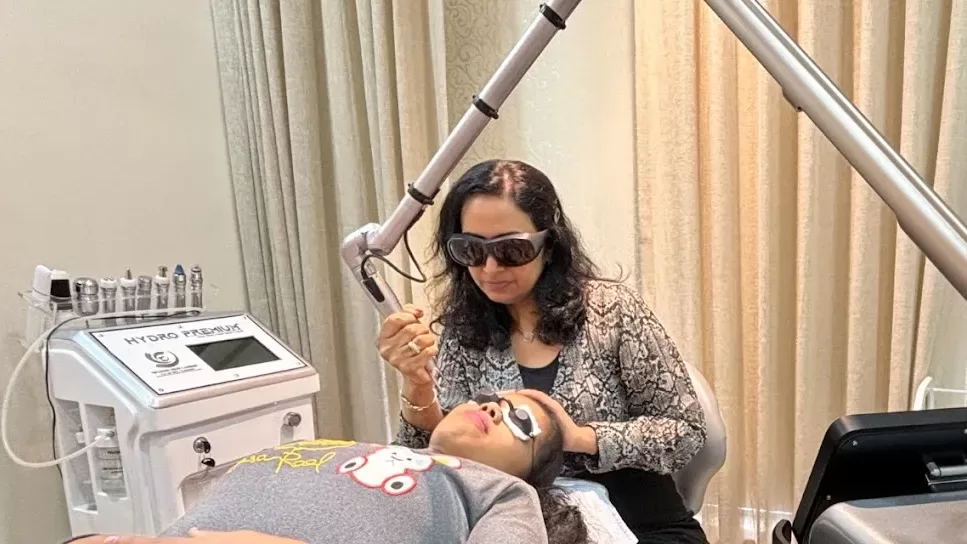
- Delivering controlled laser energy to selected areas
- Providing soothing care after the procedure
- Explaining the recovery routine and follow-up schedule
After treatment, temporary redness, warmth, swelling, dryness or mild peeling may occur. The recovery period depends on the laser type and treatment intensity.
It is important to follow your dermatologist’s aftercare instructions, avoid unnecessary sun exposure and use the recommended sunscreen. Do not rush back into strong exfoliants or active skincare products until your skin has recovered.
Who Should Avoid or Delay Hybrid Laser Treatment?
Not everyone is an immediate candidate for laser resurfacing. Your dermatologist may recommend delaying treatment or choosing another approach if you have:
- Active skin infections or cold sores in the treatment area
- Significant skin irritation or an active flare-up
- Recent tanning or sunburn
- A history of abnormal scarring that needs evaluation
- Recent procedures that have not fully healed
Certain medications and medical conditions can also affect healing. Always share your medical history and current skincare products before undergoing a laser procedure.
Laser resurfacing can cause side effects, including infection, changes in skin colour and scarring. The Mayo Clinic provides a useful overview of these risks. Read about laser resurfacing risks.
How to Care for Your Skin After a Hybrid Laser Session
The treatment is only one part of the process. How you care for your skin afterwards also matters.
- Use only the cleanser recommended by your dermatologist
- Keep the skin moisturised as advised
- Apply sunscreen according to your dermatologist’s instructions
- Avoid direct sun exposure while the skin heals
- Do not pick, scrub or peel flaking skin
- Pause strong active ingredients until your dermatologist allows them
- Attend your scheduled follow-up appointments
Remember, newly treated skin can be more sensitive. Doing more skincare immediately after a procedure does not mean better recovery. Gentle care and consistency are far more useful.
Is Hybrid Laser Treatment Worth Considering?
If you have more than one skin concern, hybrid laser technology may be worth discussing with your dermatologist. It offers a way to combine different treatment effects in a planned approach.
However, the best treatment is not necessarily the newest or most powerful one. It is the one that suits your skin, addresses your concerns and gives you a realistic balance between improvement and recovery.
A proper skin assessment can help determine whether hybrid laser resurfacing, another laser treatment or a combination of treatments is more appropriate for you.
Summary
Your skin does not need every treatment available. It needs the right treatment at the right time. If you are considering hybrid laser treatment for skin, a consultation with a dermatologist can help you understand your options and decide what is genuinely suitable for your skin.
Looking for personalised skin care in Powai? Visit Dr. Reshma Ahuja’s Skin, Hair and Laser Clinic to discuss your skin concerns and explore suitable treatment options.

Leave a Reply
You must be logged in to post a comment.