Why you may have redness on cheeks all the time and what is actually causing it
Someone asks you if you have been crying, or if you just worked out, or if you are feeling embarrassed about something. You were not crying, you did not work out, and you were not embarrassed. Your cheeks just look that way. They have looked that way for months, sometimes years. A flush of pink or red across both cheeks that never fully calms down, that gets worse after chai, after sun, after a spicy meal, after a hot shower, and sometimes for no obvious reason at all. You have called it sensitive skin for so long that you have stopped questioning whether sensitive skin is actually what this is.
Constant redness on the cheeks is one of the most underdiagnosed skin concerns in India. Most people who experience it assume it falls into one of two familiar boxes. Either their skin is simply sensitive and reactive, or they are dealing with acne and treating it as such. Both of these assumptions are sometimes correct. But for a significant number of people, the persistent redness is actually rosacea, a real, named, treatable medical condition that is rarely recognised by patients and is frequently misdiagnosed even within general medical settings in India because awareness of it is so low.
This blog walks through every possible reason your cheeks stay red all the time, how to tell rosacea apart from sensitivity and acne, the everyday triggers that make it visibly worse, and exactly what a dermatologist would recommend once the real cause is identified.
Three Reasons Your Cheeks Might Be Red All the Time

A Named Medical Condition Called Rosacea
Rosacea is a chronic inflammatory condition that causes the blood vessels in the cheeks, nose, and central face to dilate and become persistently visible. It causes redness that lasts beyond a single flushing episode, often becomes more noticeable over months and years, and is frequently mistaken for sensitive skin or acne because neither the patient nor, sometimes, the doctor recognises the specific pattern.
A Genuinely Reactive or Barrier-Compromised Skin
A weakened skin barrier from over-exfoliation, harsh products, or chronic dryness leaves nerve endings and blood vessels closer to the surface more exposed and more reactive to heat, weather, and ingredients that would not normally trigger a response. This kind of redness tends to flare and calm depending directly on what is applied to the skin and how the barrier is being treated that week.
Active or Resolving Acne Inflammation
Inflammatory acne, even the milder kind that does not produce large visible pimples, generates ongoing redness from inflammation around blocked and infected follicles. This redness usually fades as each individual breakout resolves, but if breakouts are continuous, the cheeks can appear persistently red simply because new inflammation keeps replacing the old before it has a chance to settle.
What Rosacea Actually Is and Why It Goes Unrecognised in India
Rosacea is a chronic condition involving abnormal inflammation and dilation of the small blood vessels in the central face. It most commonly affects the cheeks, nose, chin, and forehead, and it follows a pattern of flare-ups and partial remissions rather than appearing once and going away permanently. Over time, the blood vessels involved can become permanently dilated and visible, a condition called telangiectasia, which looks like fine red or purple thread-like lines just beneath the skin’s surface, particularly across the cheeks and around the nose.
Rosacea is significantly underdiagnosed in India for a few specific reasons. Most dermatology training and most patient awareness around facial skin issues in India is heavily weighted toward acne and pigmentation, both of which are extremely common in Indian patients and genuinely deserve the attention they get. Rosacea, by comparison, has historically been considered a condition that mostly affects fair- skinned populations of European descent. This is a significant and outdated misconception. Rosacea absolutely occurs in Indian skin. It can simply look slightly different and is more easily mistaken for other conditions because the redness is less starkly visible against a deeper skin tone and is more often interpreted as a brownish or dusky discoloration rather than the bright pink or red typically described in Western medical literature.
The exact cause of rosacea is not fully understood, but it involves a combination of an overactive immune and vascular response in facial skin, genetic predisposition, and in many cases, an overpopulation of microscopic Demodex mites that live naturally on everyone’s skin in small numbers but multiply excessively in rosacea-affected skin and contribute to the ongoing inflammation.
The Two Faces of Rosacea: Why It Is So Easily Confused With Other Things
Rosacea has multiple subtypes and the two most relevant to constant cheek redness look quite different from each other, which is part of why this condition gets missed so often.
The single most useful diagnostic clue, regardless of subtype, is the absence of blackheads and whiteheads. Regular acne almost always includes some comedones, the blocked pores that form blackheads and whiteheads, somewhere on the face. Rosacea-related bumps do not come with comedones at all. If your cheeks have redness and small bumps but genuinely no blackheads or whiteheads anywhere, rosacea is far more likely than acne, regardless of what your previous acne treatments have or have not done.
Telling Rosacea, Sensitivity, and Acne Apart
Use these clues together rather than any single one in isolation to get a clearer picture of what is most likely behind your constant cheek redness.
- Rosacea redness tends to be located across the central face, meaning the cheeks, nose, chin, and forehead together, and it has been present and gradually worsening over months to years rather than appearing suddenly. It often flushes more intensely after specific triggers and then partially calms but never fully disappears.
- Sensitivity from a damaged skin barrier tends to correlate very directly and predictably with what is being applied to the skin. It typically improves significantly when active ingredients are paused and the routine is simplified, and it often comes with visible dryness, flaking, or a tight feeling alongside the redness, which rosacea does not typically include.
- Acne redness is localised around individual breakouts and fades as each pimple resolves, leaving normal-coloured skin in between active spots, rather than a generalised flush sitting across the whole cheek area regardless of whether an active breakout is present.
- Visible fine red lines or thread-like vessels across the cheeks or around the sides of the nose are strongly suggestive of rosacea and are not typically a feature of acne or simple sensitivity.
- If your redness flushes dramatically with hot tea or coffee, spicy food, alcohol, or sudden temperature changes, and the flush takes much longer than a few minutes to subside, this pattern is far more characteristic of rosacea than of either sensitivity or acne.
- If the redness coexists with flaking, scaling, and itch particularly around the eyebrows, sides of the nose, and hairline, consider seborrheic dermatitis, which can occur alongside rosacea or independently and needs its own targeted antifungal treatment.
The Everyday Indian Lifestyle Triggers Making Cheek Redness Worse
Whether the underlying cause is rosacea, sensitivity, or acne, certain habits that are deeply built into everyday Indian life act as powerful triggers for facial redness and flushing. Recognising them does not mean giving them all up, but it does mean understanding why your cheeks react the way they do at specific moments.
- Hot chai and coffee, consumed multiple times a day by most Indians, is one of the most consistent rosacea triggers because the heat of the liquid itself causes facial blood vessels to dilate, independent of caffeine content. Switching to a slightly cooler temperature, even just letting the cup sit for a minute or two longer before drinking, meaningfully reduces this specific trigger.
- Spicy food, a near-daily staple across most Indian regional cuisines, is a well-documented rosacea trigger. Capsaicin, the compound that creates the sensation of heat in chillies, directly stimulates nerve receptors that cause facial flushing. This does not mean giving up spice entirely, but recognising the connection helps explain why redness sometimes spikes dramatically after a particular meal.
- Sun exposure, which is essentially unavoidable in most of India for large parts of the year, is one of the most significant aggravators of rosacea. UV exposure directly damages and dilates the small blood vessels in facial skin and is one of the leading reasons rosacea progressively worsens over time if sun protection is inconsistent. A broad-spectrum sunscreen applied every single day, regardless of whether it is sunny or cloudy, is one of the single most important interventions for anyone with rosacea-pattern redness.
- Mumbai’s heat and humidity together create a near-constant low-grade flushing trigger simply through the body’s effort to thermoregulate. For anyone with rosacea-prone skin living in this climate, the redness can feel like it never gets a real chance to settle because a new trigger, in the form of just stepping outside, arrives within minutes of the last one calming down.
- Using multiple actives, harsh scrubs, or DIY remedies involving lemon, baking soda, or toothpaste in an attempt to treat the redness as if it were acne or pigmentation actively worsens rosacea-pattern redness by further compromising the barrier and increasing inflammation. This is one of the most common reasons rosacea redness escalates rather than improves over a year of well-intentioned but mismatched skincare.
What Actually Helps Constant Cheek Redness
Once you have a clearer sense of what is likely behind your redness, these steps make a genuine difference, particularly for rosacea-pattern redness which responds very specifically to the right approach.
- Apply a broad-spectrum sunscreen every single morning regardless of weather. This is the single most impactful daily habit for anyone with rosacea-pattern redness and also genuinely helps barrier-related sensitivity by reducing UV-driven inflammation.
- Simplify the routine dramatically to a gentle cleanser and a fragrance-free, ceramide-rich moisturiser. Remove every harsh active, scrub, and DIY remedy from the routine for at least four weeks and observe how the skin responds without these inputs before reintroducing anything.
- Track your specific triggers for two to three weeks. Note when the redness flares, what you ate or drank, the temperature, and your emotional state at the time. Most people discover a clear and personal pattern that they can then actively manage rather than feeling at the mercy of unpredictable flares.
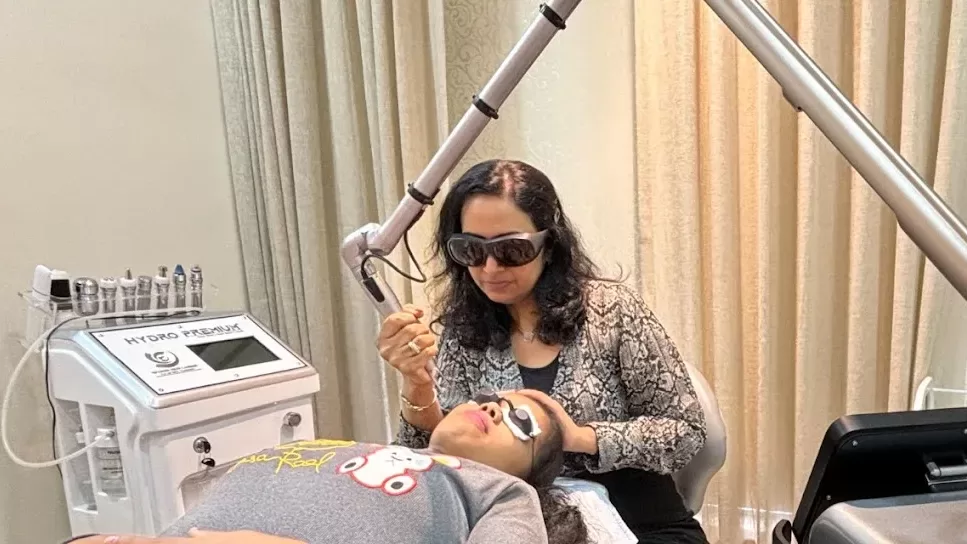
- See a dermatologist for a proper diagnosis before continuing to self-treat. Rosacea confirmed by a dermatologist can be treated with prescription topical metronidazole or azelaic acid, oral antibiotics in low anti-inflammatory doses for more significant cases, and in some cases laser or light-based treatments that directly target the visible dilated blood vessels themselves. None of these options are available without a proper diagnosis, and self-treating rosacea as acne or simple sensitivity for years, as so many people do, delays access to treatments that could have helped much sooner.
- Avoid self-diagnosing and self-treating with online suggestions intended for general acne or sensitivity if your pattern matches rosacea more closely. The treatments that help acne and the treatments that help rosacea are often opposite in approach, and using the wrong one consistently can make the underlying condition measurably worse over time.
Summary
If you have spent years being told that you simply have sensitive skin, or have spent the same years buying acne products that never seemed to fully work on cheeks that were never really showing acne in the first place, it may be time to ask a different question. Redness on the cheeks all the time is not just a trait you have to live with. It is a symptom, and symptoms have causes that can be identified and treated. A dermatologist can look at the exact pattern of your redness and tell you, often within a single visit, whether you are dealing with rosacea, a barrier issue, or something else entirely, and can put you on a path that actually addresses your skin’s real need instead of guessing at it for another year.